Jaw Locked or Suddenly Painful? When TMJ Becomes a Dental Emergency in Tustin
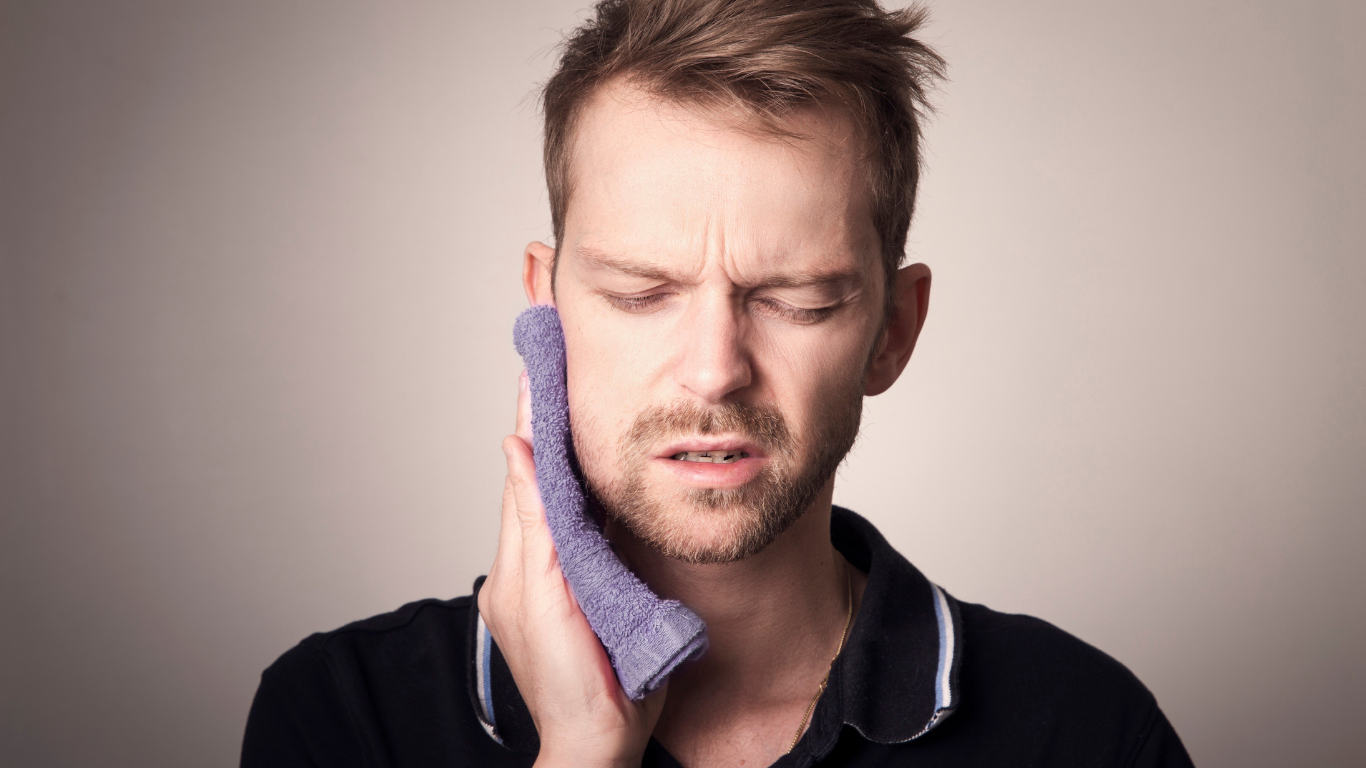
TMJ pain is rarely a true emergency, but a few jaw symptoms are. Get emergency care if your jaw is stuck open and won't close, if it hurts after a blow to the face, or if jaw pain comes with chest pressure or shortness of breath. A jaw that locks partly closed needs a prompt dental visit.
Quick Answer
Can't close your mouth, or jaw pain with chest symptoms: emergency care now. Can't open all the way, or new jaw pain and clicking: book a dental exam soon.
Key Takeaways
- A jaw stuck open is usually a dislocation and requires emergency care. Don't try to push it back yourself.
- Jaw pain with chest pressure, shortness of breath, or arm pain can be a warning sign of a heart attack. Call 911.
- A jaw that suddenly won't open fully is usually a TMJ problem. It's urgent enough for a prompt dental visit, not the ER.
- Clicking without pain is common and, according to the National Institutes of Health, doesn't need treatment.
- Most flare-ups calm down with soft foods, heat or cold, and less clenching.
The reassuring part first: most jaws that lock, catch, or ache are not emergencies. The trouble is that the few that are can look alike at 11 p.m., when you're deciding whether to drive to urgent care or wait for morning.
If you're reading this with your mouth stuck open, stop here and go to an emergency room or urgent care. The rest of this can wait.
For everyone else, this guide sorts jaw symptoms by how fast they need attention. Dr. Li has additional training in diagnosing and treating temporomandibular disorders, and our
TMJ page covers the longer-term side of care at Transformation Dental Partners in Tustin.
Which jaw symptoms require an emergency room visit?
Three situations belong in emergency care first: a jaw that is stuck open and won't close, jaw pain or a bite that suddenly doesn't line up after a fall or a blow to the face, and jaw pain that shows up with chest pressure, shortness of breath, nausea, or arm pain. Call 911 for breathing trouble or chest symptoms.
A jaw stuck open is usually a dislocation. The lower jaw has slipped forward out of the joint, the mouth won't close, and the face can look lopsided.
MedlinePlus, from the National Library of Medicine, says a broken or dislocated jaw needs medical attention right away because of the risk of breathing problems or bleeding. It also says not to try to correct the jaw's position yourself. Support the jaw gently with your hands on the way in and let a provider reset it.
Injury is its own category. If you took a hit to the face and now your teeth don't meet the way they used to, or chewing hurts in front of the ear, treat it as a possible fracture and go to the ER.
The third one surprises people. The American Heart Association lists
jaw, neck, or back pain among the warning signs of a heart attack, and women are somewhat more likely than men to have these less typical symptoms. Jaw pain with no dental explanation, arriving alongside chest discomfort, breathlessness, a cold sweat, or lightheadedness, is a reason to call 911 before anyone looks at your teeth.
What if your jaw is locked and won't open all the way?
That's usually a closed-lock issue: the cushioning disc inside the jaw joint slips out of place and prevents full opening. It can be painful and alarming, but it is rarely dangerous. Don't force the jaw open. Book a dental exam promptly, ideally within a day or two, especially if this's the first time it's happened.
Closed locks tend to come on after something ordinary: a big yawn, a wide bite into a sandwich, a long night of clenching. Some people have had clicking for years before the first lock. Others have no warning at all.
The symptoms that point toward a temporomandibular disorder, according to the National Institute of Dental and Craniofacial Research (NIDCR), include:
- Pain in the chewing muscles or the jaw joint, the most common symptom
- Pain that spreads to the face or neck
- Jaw stiffness, or limited movement or locking
- Clicking, popping, or grating that hurts when you open or close
- Ringing in the ears, hearing changes, or dizziness
- A change in the way your upper and lower teeth fit together
One trigger is a little awkward for a dental office to mention. MedlinePlus lists dental and medical procedures among the causes of jaw dislocation, alongside falls, sports injuries, and car accidents. Holding your mouth open for a long stretch is hard work for that joint.
Is jaw pain ever a sign of something else?
Sometimes. Pain in the jaw can come from the joint, the chewing muscles, a tooth, or, less often, the heart. NIDCR notes that pain in the mouth, jaw, or face may or may not be related to a TMJ disorder, and other conditions may need to be ruled out first. Swelling with a fever points to a dental infection instead.
A cracked molar or an infected tooth can send pain along the jaw that feels a lot like joint pain. That overlap is why a TMJ evaluation usually includes a close look at the teeth. If a tooth turns out to be the cause, our guide to the first steps to take during a dental emergency in Tustin covers what to do before your visit.
TMJ disorders themselves are common. NIDCR estimates they affect about 5% of U.S. adults, and they are twice as common in women, especially between ages 35 and 44.
Why TMD starts in the first place is, in most cases, still an open question. NIDCR says the exact cause usually isn't clear, and that genes, stress, and the way a person processes pain may all play a part. Researchers are still working on it.
What can you do at home for a TMJ flare-up?
Give the joint a rest and keep things simple. NIDCR lists conservative first steps: soft foods, heat or cold on the face paired with gentle jaw stretches, an over-the-counter anti-inflammatory pain reliever, and cutting back on clenching, gum chewing, and nail biting. For many people, symptoms settle on their own.
A few practical adjustments help while it settles:
- Cut food into small pieces and skip chewy things like bagels, jerky, and gum.
- Support your chin with your hand when you yawn.
- Notice daytime clenching. Lips together, teeth slightly apart is the resting position you're aiming for.
- Take any pain reliever exactly as the label directs.
- Don't pry the jaw open or try to pop it back into place.
Book a regular exam if the pain lasts more than a couple of weeks, if the jaw locks more than once, or if your bite starts to feel different. Those are signs the problem isn't settling on its own.
How does Dr. Li evaluate TMJ problems?
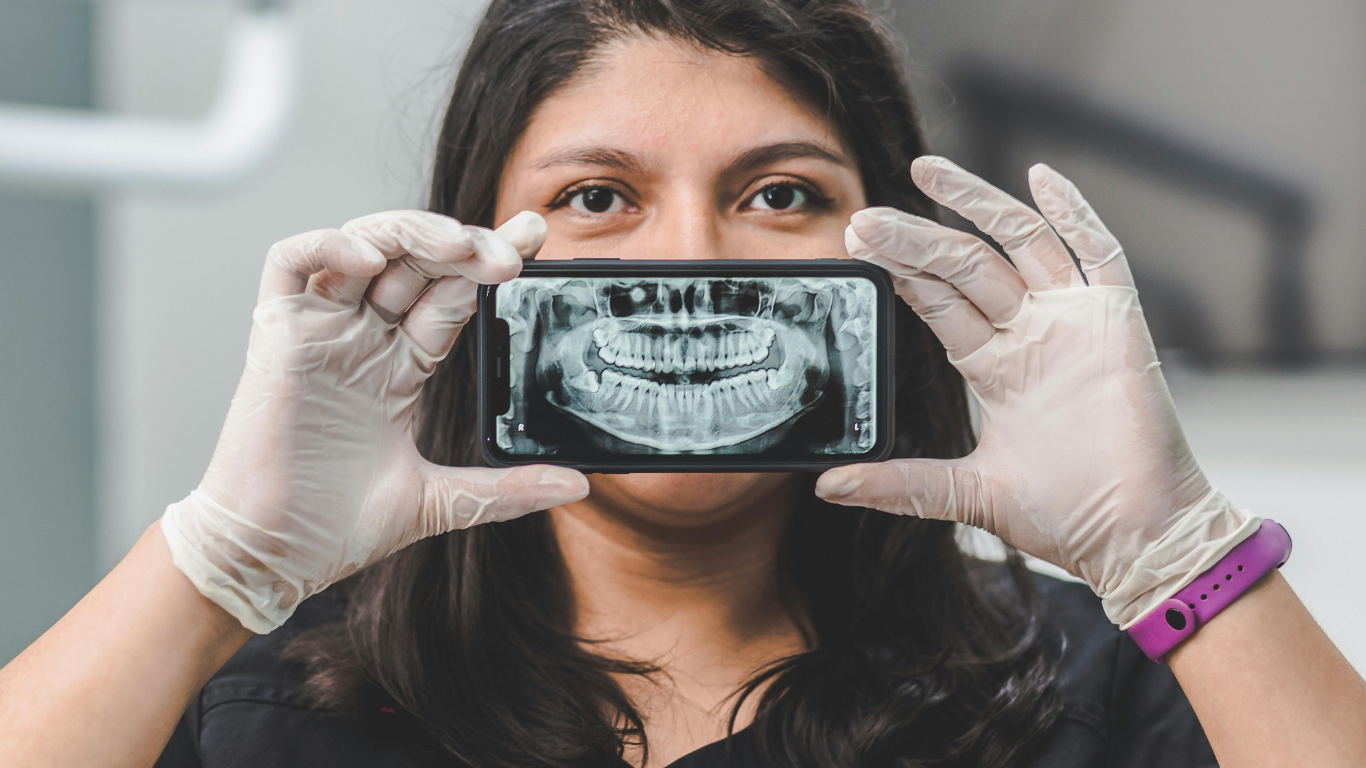
It starts with questions and a hands-on exam. Dr. Li asks where and when the pain happens and what makes it better or worse, checks how the jaw opens and moves, and looks at the teeth for signs of clenching or grinding. When imaging would help, the office's CBCT scanner can show irregularities in the jaw joint itself.
The same exam rules out the tooth problems that imitate TMJ pain. Dr. Li has pursued specific training in bite evaluation, which looks at how the joints, muscles, and teeth work together during chewing.
For many patients, treatment starts with the conservative steps above and a plan to reduce clenching, which may include a custom nightguard. NIDCR's advice on these appliances is sensible for anyone: ask how it's meant to work, make sure it isn't designed to permanently change your bite, and stop wearing it and call your dentist if it causes pain. If clenching or grinding is part of the picture, our page on
bruxism explains that side of treatment.
Emergency patients get same-day priority during office hours, and the practice's emergency line is answered 24 hours a day.
Frequently Asked Questions
Is a locked jaw an emergency?
It depends which way it's locked. A jaw stuck open that won't close is usually a dislocation and needs emergency care. A jaw that won't open fully is usually a TMJ disc problem. It needs a prompt dental exam, but it rarely needs the emergency room.
Should I go to urgent care or a dentist for jaw pain?
Go to emergency or urgent care for a jaw stuck open, jaw pain after an injury, or jaw pain with chest pressure or shortness of breath. For jaw pain, clicking, or stiffness without those signs, a dentist trained in TMJ disorders is the right first stop.
Can TMJ go away on its own?
Often, yes. NIDCR notes that TMD symptoms go away without treatment for many people. Soft foods, heat or cold, and less clenching help while it settles. Pain that lasts more than a couple of weeks, or a jaw that keeps locking, is worth an exam.
Is jaw clicking a sign of TMJ?
Not by itself. Clicking or popping without pain is common and considered normal, according to NIDCR, and it doesn't need treatment. Clicking that hurts, or that comes with locking or trouble chewing, is a reason to have the joint checked.
Can jaw pain be a heart attack?
It can. The American Heart Association lists jaw, neck, or back pain among heart attack warning signs, and women are somewhat more likely than men to have them. Jaw pain with chest discomfort, shortness of breath, nausea, or lightheadedness means calling 911.
What does a TMJ dentist do?
A dentist with TMJ training looks at how your jaw joints, chewing muscles, and teeth work together, often with imaging, and rules out tooth problems that mimic joint pain. Care usually starts conservative, with habit changes, home care, and sometimes an appliance for clenching.
Who's Behind This Guide
Who's Behind This Guide
Transformation Dental Partners is led by Dr. Davin Li, DDS. Dr. Li was born and raised in Southern California and earned his undergraduate degree at the University of California, San Diego. He went on to the USC Ostrow School of Dentistry, graduating in the top 10% of his class in 2012.
He completed his residency at Rancho Los Amigos Rehabilitation Center in Downey. There, he pursued advanced training in treating patients who are medically, physically, or mentally compromised. Dr. Li has additional training in the diagnosis and treatment of temporomandibular disorders, and he is trained in Invisalign, dental implants, and CEREC.
He is a member of the American Association of Endodontists, the Special Care Dentistry Association, the Orange County Dental Society, the California Dental Association, and the American Dental Association. One day a week, he provides in-home dental care to medically compromised older adults in Los Angeles, Orange, and San Diego counties.
The NIDCR guide to temporomandibular disorders, last reviewed in August 2026, is the most thorough plain-language reference on TMJ symptoms and treatment options.
Jaw Giving You Trouble?
Stuck open or paired with chest symptoms means emergency care. Nearly everything else starts with a prompt, careful exam.
Transformation Dental Partners is at 13372 Newport Ave, Suite G, Tustin, CA 92780.
We're open Monday through Thursday, 8:00 AM to 5:00 PM, and Friday, 8:00 AM to 1:00 PM, with Friday afternoons and weekends by appointment.