Signs of a Cavity: How to Tell When a Small Problem Needs a Dentist
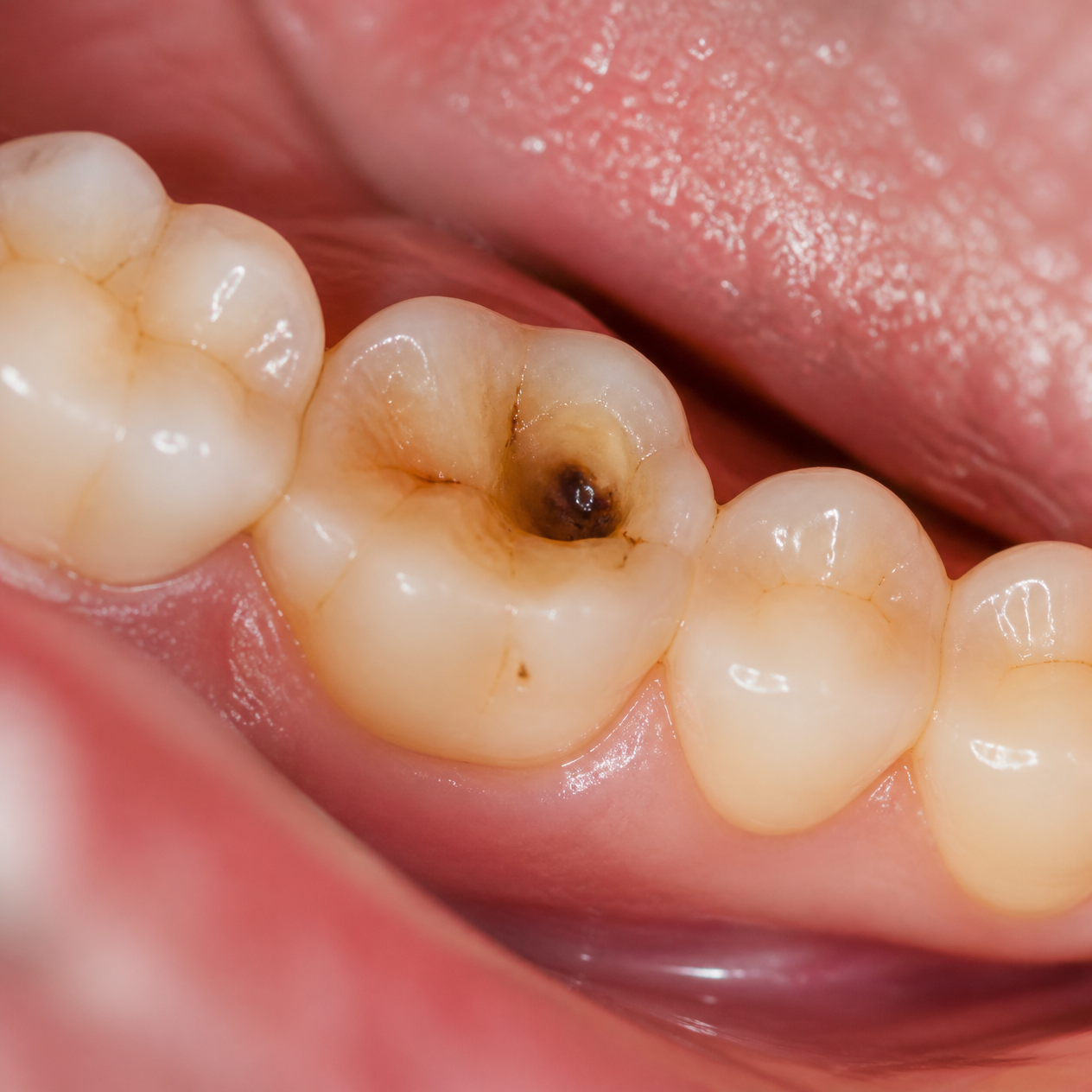
The most common signs of a cavity are a quick twinge when you eat something sweet, cold, or hot, a rough spot your tongue keeps finding, and a white, gray, or brown mark on the tooth. Early decay often causes no pain. Lingering pain, pain when biting, or swelling means the cavity is deeper and needs prompt care.
Quick Answer
A short zing that fades: book an exam soon. Pain that hangs on, wakes you up, or comes with swelling: call the dentist today.
Key Takeaways
- Most cavities don't hurt until they reach the softer layer under the enamel, which is why checkups catch so many of them.
- Sensitivity that fades in a second or two is a reason to book a visit. Sensitivity that lingers is a reason to call today.
- Cavities between teeth are the hardest to see in a mirror and are often found on X-rays.
- Once decay breaks through the enamel, it will not heal on its own.
- Swelling, a bump on the gum, or pain that keeps you awake points to infection and belongs in the same-day category.
If you're reading this with your tongue resting on one particular tooth, you're in good company. Most people start searching after the same thing happens: a sip of iced coffee or a bite of leftover Halloween candy sends a sharp little jolt through one spot, and then it's gone.
That jolt might be nothing. It might also be the first sign of decay. At Transformation Dental Partners in Tustin, we check for cavities at every exam, and our
restorative dentistry page covers how we repair them with tooth-colored fillings.
Here is how to read the signals your tooth is sending, and how to tell a "book it this month" problem from a "call today" one.
What are the early signs of a cavity?
Early cavities are quiet. The first signs are usually a brief twinge from sweets or cold drinks, a spot that feels rough or catches floss, and a chalky white, gray, or light brown patch on the enamel. Many early cavities cause no symptoms at all and are found only at a dental exam or on an X-ray.
Signs you might notice yourself:
- A quick zing from something sweet, cold, or hot that fades within a few seconds
- A rough edge, pit, or small hole your tongue keeps returning to
- Floss that shreds or catches in the same place every time
- A white, gray, brown, or black spot on the chewing surface or near the gumline
- Food packing into the same gap after meals
Cavities are common enough that none of this should be embarrassing. The CDC's
2024 Oral Health Surveillance Report found that 1 in 5 adults aged 20 to 64 had at least one untreated cavity.
Why doesn't a cavity hurt at first?
Enamel, the hard outer layer of the tooth, has no nerves. Decay can eat into it for months without any pain. Symptoms usually start when the cavity reaches dentin, the softer layer underneath, which has tiny channels leading toward the nerve. That is when sweets and temperature start to register.
This is why a cavity can feel like it appeared overnight. It didn't. It was working quietly in the enamel for a long while, and the first twinge simply marks the point where it reached something that can feel.
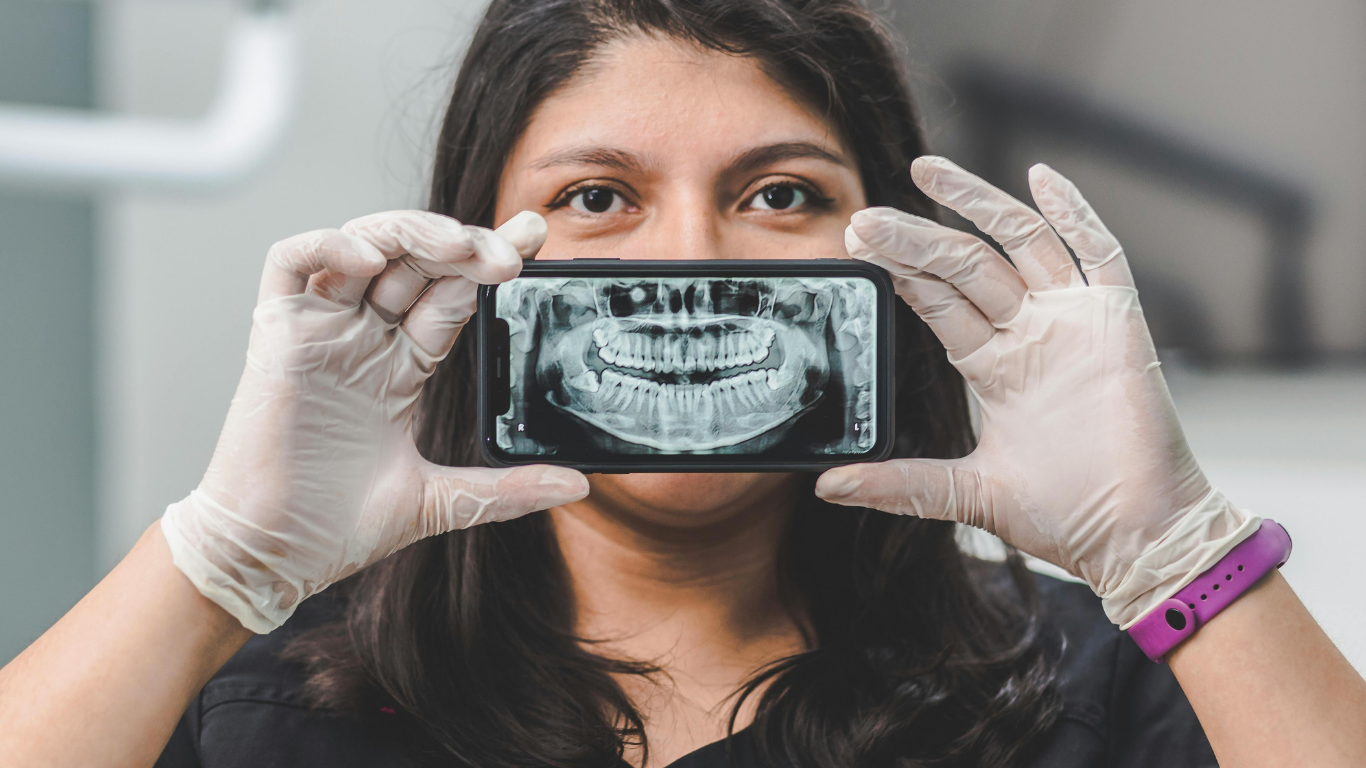
Cavities between teeth are harder still. A mirror won't show them, and they often sit below the contact point where two teeth touch. We rely on X-rays for those, and our office also uses CBCT imaging, a 3D scan that can show decay and problems inside the tooth that a flat image can miss.
We can't always tell you why one cavity hurts early and another stays silent until it is large. The size of the cavity, where it sits, and how close it is to the nerve all play a part, and two people with similar cavities can report very different symptoms.
When is a cavity an emergency?
A cavity becomes urgent when the decay reaches the pulp, the nerve and blood supply at the center of the tooth. Warning signs include pain that lingers after a hot or cold drink, throbbing that starts on its own, pain that wakes you up, and swelling or a pimple-like bump on the gum. Those call for a same-day visit.
This table sorts what you might be feeling by how soon to act.
| What you notice | What it often means | How soon to call |
|---|---|---|
| Brief zing from sweets or cold that fades in seconds | Early decay or exposed dentin | Book an exam in the next few weeks |
| A visible dark spot or small hole, no pain | Decay through the enamel | Book an exam soon; it will not reverse |
| Sharp pain when you bite down on that tooth | A deeper cavity, a crack, or a failing filling | Within a day or two |
| Pain that lingers after hot or cold, or throbs on its own | Inflamed nerve inside the tooth | Same day |
| Swelling, a gum bump, a bad taste, or fever | Possible infection or abscess | Same day; the ER if you have trouble breathing or swallowing |
The CDC's cavity fast facts note that untreated cavities can lead to an abscess, an infection that can spread to other parts of the body. Waiting does not make a cavity smaller. Our earlier post on four types of dental emergencies that need immediate care covers the other situations that belong in the same-day group.
Can a cavity heal on its own?
Only at the very earliest stage. A chalky white spot where minerals have started to wash out of the enamel can sometimes be reversed with fluoride and better brushing, flossing, and diet habits. Once decay has broken through and formed an actual hole, the tooth cannot rebuild it, and a dentist has to remove the decay and fill the space.
How a cavity usually progresses:
- White spot: minerals are leaving the enamel. This stage can often be stopped.
- Enamel cavity: a small hole has formed. Usually painless. Needs a filling.
- Dentin cavity: decay reaches the softer layer. Sensitivity starts. Still usually a filling.
- Pulp involvement: decay reaches the nerve. Lingering or spontaneous pain. Often needs a root canal.
- Abscess: infection forms at the root. Swelling and throbbing. Needs same-day care.
The jump from step three to step four is the one worth avoiding, because it changes the repair from a filling to a much bigger job.
What happens when you come in for a cavity?
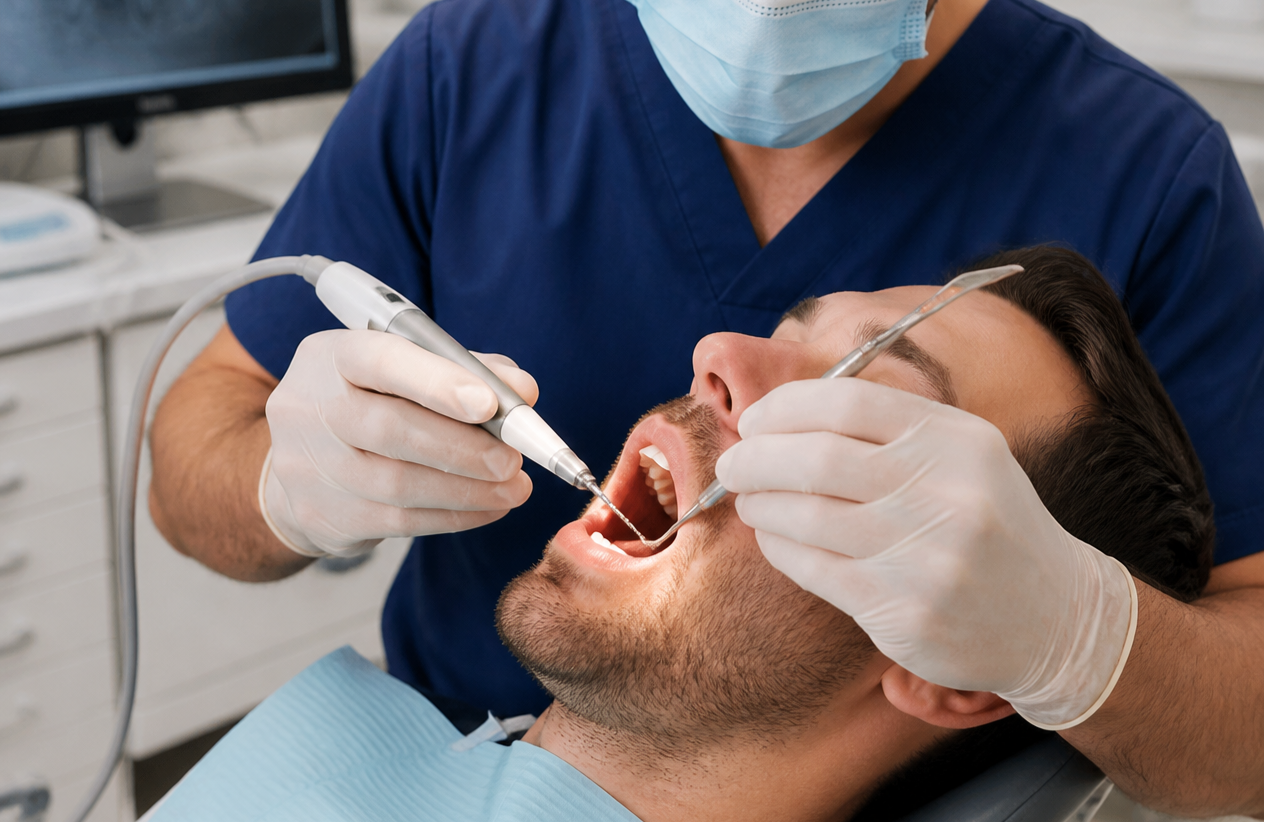
Dr. Li examines the tooth, takes imaging to see how deep the decay goes, and explains what he finds before anything starts. Most cavities are treated in one visit: the area is numbed, the decay is removed, and the tooth is rebuilt with a tooth-colored filling matched to your natural shade.
If the decay has reached the nerve, the conversation changes. We'll talk through whether a root canal can save the tooth, and what each option involves, so you can make the call with full information. For patients who feel anxious about dental work, sedation dentistry is available at our office.
Frequently Asked Questions
What does a cavity feel like at first?
Often it feels like nothing. When early symptoms do show up, they tend to be a brief sting from sweets, cold, or heat, or a rough spot your tongue keeps finding. The feeling usually fades quickly. Pain that lingers suggests the decay is deeper.
How can I tell if I have a cavity or just sensitive teeth?
Sensitivity from worn enamel or gum recession tends to affect several teeth and fades fast. A cavity is more often one specific tooth, may have a visible spot or hole, and can start to hurt when you bite. A dental exam with X-rays is the only reliable way to tell.
How long can a cavity go untreated?
There's no safe timeline. Some cavities grow slowly over months, while others reach the nerve faster, especially in teeth with deep grooves or old fillings. Once decay breaks through the enamel, it keeps growing until it is removed, so the earlier it is filled, the smaller the repair.
Can you see a cavity between your teeth?
Usually not. Cavities between teeth start at the contact point, which a mirror can't show. You might notice floss shredding in one spot or food catching there. Dentists typically find these cavities on X-rays taken during a routine exam.
Is a cavity a dental emergency?
A small cavity is not an emergency, but it should be treated soon. It becomes urgent when you have lingering or throbbing pain, pain that wakes you up, swelling, or a bump on the gum. Those signs mean the decay may have reached the nerve and needs same-day care.
Do I need a filling if the cavity doesn't hurt?
Yes, in most cases. A lack of pain usually means the decay hasn't reached the dentin or nerve yet, which is the best time to fix it. A painless cavity is typically a small, quick filling. Waiting until it hurts often means a larger repair.
Who's Behind This Guide
Transformation Dental Partners is led by Dr. Davin Li, DDS. Dr. Li was born and raised in Southern California and earned his undergraduate degree at the University of California, San Diego. He graduated in the top 10% of his class from the USC Ostrow School of Dentistry in 2012.
He completed his residency at Rancho Los Amigos Rehabilitation Center in Downey, where he trained in treating patients who are medically, physically, or mentally compromised. He is also trained in Invisalign, dental implants, and CEREC.
Dr. Li's memberships include the American Dental Association, the California Dental Association, the Orange County Dental Society, the Special Care Dentistry Association, and the American Association of Endodontists. One day a week, he provides in-home dental care to medically compromised older adults in Los Angeles, Orange, and San Diego counties.
Noticed Something With One Tooth?
A small twinge today is usually a small repair. If a spot has started to catch your tongue or your floss, or if something sweet or cold keeps getting your attention, an exam will tell you exactly what is going on.
Transformation Dental Partners is at 13372 Newport Ave, Suite G, Tustin, CA 92780. We're open Monday through Thursday, 8:00 AM to 5:00 PM, and Friday, 8:00 AM to 1:00 PM, with Friday afternoons and weekends by appointment. Over Thanksgiving, the office is closed Thursday, November 26, and Friday, November 27. If you have swelling or pain that won't let up, our 24-hour emergency line is there when the office is closed.